
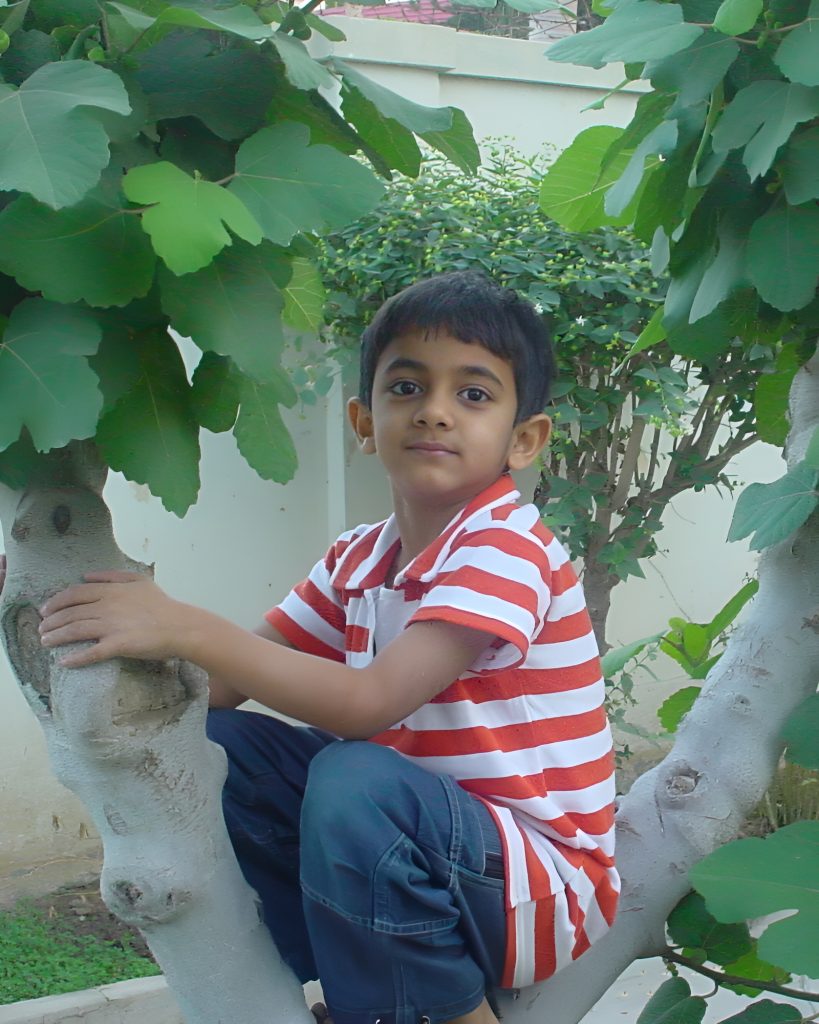
Ta‘lim (education), in its broadest sense, includes any act or experience that shapes the mind, character, or ability of a person. In its technical sense, it is the deliberate process through which a society transmits its accumulated knowledge, skills, and values from one generation to the next. Tarbiyyah, by contrast, refers to nurturing and developing knowledge, skills, and competencies through practical instruction, discipline, and sustained cultivation of character. Training differs from casual exercise: people may engage in exercise intermittently for enjoyment, whereas training is purposeful, structured, and directed toward measurable improvement in capacity, capability, and performance. In the same way, the upbringing of children is not left to impulse or improvisation. A child is a trust and an asset for generations; therefore, the role of the teacher and the methodology adopted by parents is pivotal. It is most unfortunate that many Muslim parents remain unfamiliar with the proper principles of Ta‘lim and Tarbiyyah for children, an obligation that follows Walayah. Instead, they raise their children according to personal assumptions, often without access to sound guidance or a coherent method. To ease their conscience, parents may persuade themselves that their approach is correct, only to discover later that their children have grown distant from their religion, civilization, and cultural values. When hardship comes, children may revert to self-interest rather than draw strength from religious ethics. The influence of Western culture, with its emphasis on individualism, often amplifies such tendencies. Improper upbringing thus becomes a source of anxiety and regret: how can one expect mangoes after sowing seeds onions.
That said, parents are not solely to blame. This subject is seldom discussed in an organized and practical manner. The challenge is especially acute for families living in Western societies, where cultural differences and unfamiliar religious practices are more unescapable than in many Eastern contexts. In view of the seriousness of this issue, an informed discussion in the light of Shari‘ah is indispensable. Devotion, affection, and care toward parents are considered a voluntary ‘ibadah. Such honour and reward have been granted because of the immense responsibility parents’ bear in raising their children. Accordingly, it is the duty of parents to recognize the dignity and gravity of nurturing and training their child. The following narrations draw attention to this responsibility:
“May Allah bless those parents who facilitate their children with Ta‘lim and treat them with kindness.”
“May Allah send La‘nah upon those parents who declare their children Aaq.”
Every achievement demands Tadrib and Tamrin (practice and training). When one follows Fitrah, the natural development of learning, what was once difficult becomes second nature. Parents raise children through repeated instruction, reinforcement, and consistent modelling, so that teachings become lifelong habits. When children are very young, we begin with foundational Ta‘lim: teaching them the names of the Nabi (S) and his Ahl al-Bayt (as) – Al Khamsah al-Ath’ar (as), Ya Muhammad, Ya Ali, Ya Fatima, Ya Hasan, Ya Husayn. We teach them Salah and help them memorize the Qur’an in Arabic. Once these essentials are established through training and repetition, we then teach the meanings behind what they have learnt – why we say “Ya” before each blessed name, and why we recite Salaw’at with accents and forms. This gradual evolution makes learning easier for the child, while strengthening and anchoring Aqaid.
Children learn best by observation. When they see their parents establishing Salah, they are naturally drawn to imitate them out of love and admiration. In early years, children are flexible and therefore require firmness and disciplined boundaries. As a child matures, temperament often hardens, and a gentler, more reflective approach becomes necessary – like water that gradually and naturally shapes even a mountain. Surah al-Alaq also reflects the principle of gradual learning. When Allah revealed the first Ayah of the Qur’an, He instructed Rasulullah (S):
“Recite in the name of your Rabb, who created man…”
Beginning with the name of Allah both eases the tongue and strengthens the heart. The Qur’an was revealed in Arabic – a language whose structure, richness, and precision holds a unique place among languages. During the dark eras of the Umayyads and Abbasids, the Imams of the Ahl al-Bayt (as) faced a stark choice: political revolt against tyranny, or reform through Ta‘lim. By Hikmah ‘ilahiyyah (divine wisdom), they chose the path of education and spiritual formation.
Through the foresight of al-Imam al-Baqir (as) and al-Imam al-Sadiq (as), the Muslim world witnessed a renaissance of learning and renewal.
To see more articles, please scroll down